Stud finder names from ads: what to check before you order
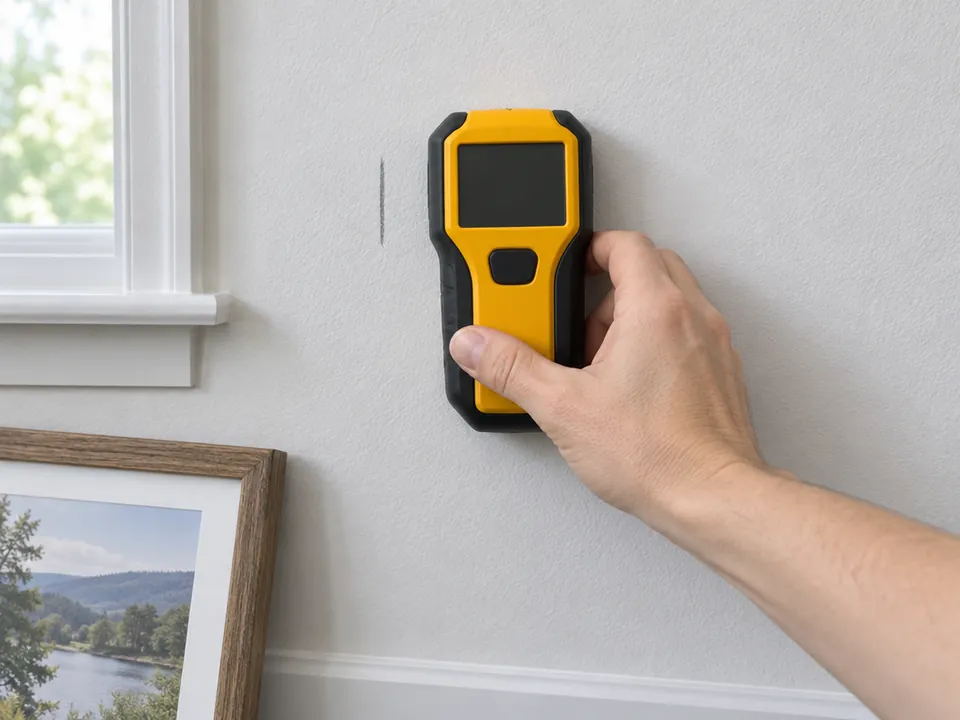
You want to hang a TV, a shelf or a heavy mirror on solid wood. A stud finder does that job. You slide it across the wall, and it marks where the studs sit.
Ads show many names for this tool, but the doubts stay the same. Will it read through plaster, can it show wires, and what battery does it take? Each answer belongs in the listing, stated by the seller, before you pay.
What to check on any stud finder listing
- Your wall type. Check whether the listing names drywall, plaster or both, and the depth the maker states it reads. Plaster walls are often thicker, so match that depth to your wall.
- Modes and stud center. Look for the stated modes, such as wood, metal and AC wire, and how it marks a stud center. A blank wire reading does not prove the wall is clear.
- Battery and return window. Before you order, find the battery type and whether one comes in the box. Then read the seller's return window, in case the tool cannot read your wall.